

Wa Tawasul by Ci CORP | META Verified WhatsApp Business Solution Provider | Dubai, UAE
If there is one concept that every UAE business needs to understand before it can do serious work on WhatsApp Business API, it is the message template. Templates are the gateway to every outbound campaign, every automated notification, and every first message in a new conversation. Get them right and they become some of the most effective conversion tools in your marketing stack. Get them wrong and they sit in an approval queue indefinitely, or they get rejected and you start again.
The good news is that once you understand how templates work, why Meta requires them, and what the approval process actually looks for, creating effective templates becomes straightforward. And with Wa Tawasul by Ci CORP managing the submission process, most UAE businesses get their first batch of templates approved without a single rejection.
This guide covers everything a marketer or business owner in the UAE needs to know about WhatsApp message templates, what they are, the different types, how to write them, how to submit them, and how to build a template library that gives your team the tools they need to communicate effectively through WhatsApp Business API.
What Message Templates Are and Why Meta Requires Them
A WhatsApp message template is a pre-written, pre-approved message format that your business submits to Meta before using it in outbound communication. Templates are required for any message your business sends to start a new conversation with a customer, or any message sent outside the 24-hour customer service window that opens when a customer messages you first.
Meta introduced the template requirement to protect WhatsApp users from spam. Without a template approval process, any business with API access could send any message to any number. The template system creates a layer of review that ensures outbound business messages meet a minimum standard of legitimacy and relevance before they reach customers at scale.
For businesses, this creates one important operational reality: you cannot improvise outbound messages on WhatsApp Business API the way you might send an ad-hoc email. Every message type you want to send, from appointment reminders to promotional broadcasts to payment notifications, needs an approved template before it goes out. Planning your template library in advance is therefore one of the first and most important things to do when setting up WhatsApp Business API through Wa Tawasul.
The Three Main Template Categories and What Each One Covers
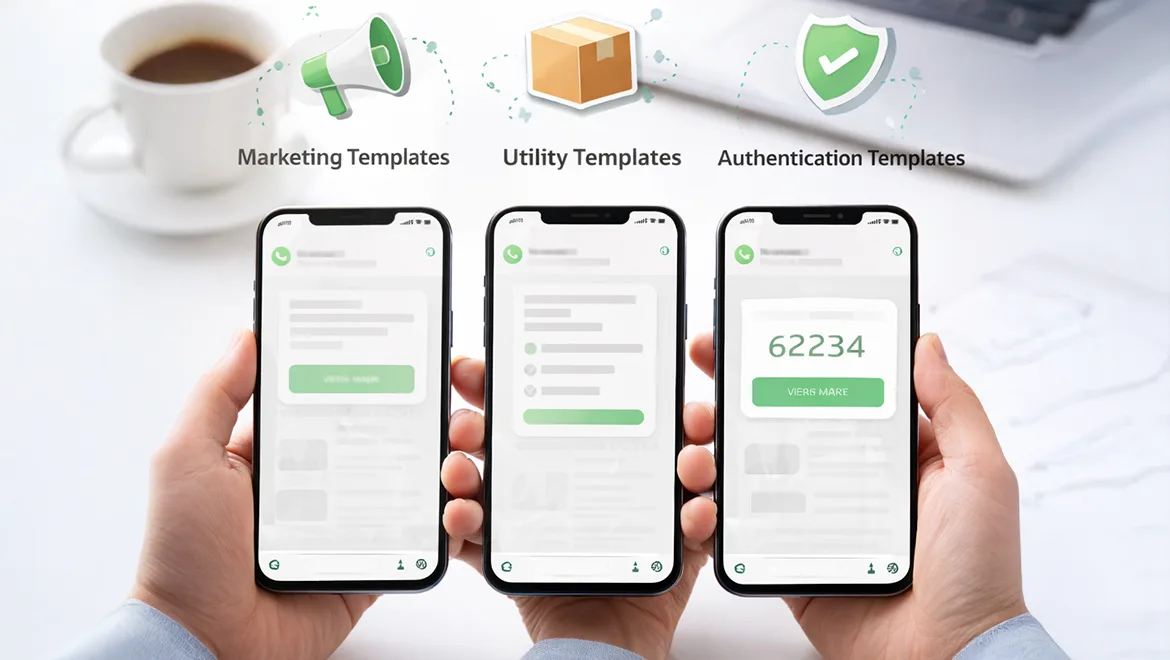
Marketing templates
Marketing templates are used for promotional messages, announcements, product launches, seasonal offers, and any communication whose primary purpose is to drive a commercial response. In the UAE, this covers Ramadan campaigns, National Day promotions, new property launch announcements, flash sale alerts, and course enrolment drives. Marketing templates have the highest cost per conversation in Meta's pricing structure, but they also tend to generate the strongest commercial returns when they are well-written and targeted at genuinely opted-in contacts.
Utility templates
Utility templates cover transactional and operational messages that relate to an existing relationship or transaction. Order confirmations, appointment reminders, shipping updates, payment receipts, account notifications, and booking confirmations are all utility messages. They cost less per conversation than marketing templates and they tend to have very high open and read rates because customers are actively expecting them. For most businesses, utility templates should be the first category to build out, as they deliver immediate operational value from day one.
Authentication templates
Authentication templates are used for one-time passwords and verification codes sent via WhatsApp. They are the most tightly controlled category, with strict format requirements, and they are priced lower than marketing or utility templates. Not all businesses need authentication templates, but for platforms that use WhatsApp for login verification or identity confirmation, they are a cost-effective alternative to SMS-based OTP systems.
| Template Types Most UAE Businesses Need First | Template Types to Build Next |
|---|---|
| Welcome message for new enquiries. Appointment reminder (24-hour and 2-hour versions). Order or booking confirmation. Follow-up message for unanswered enquiries. Payment reminder or receipt notification. | Seasonal promotional broadcasts for Ramadan, UAE National Day, and DSF. Re-engagement message for cold leads. Post-purchase feedback request. New product or service announcement. Referral programme invitation. |
How to Write Templates That Get Approved First Time
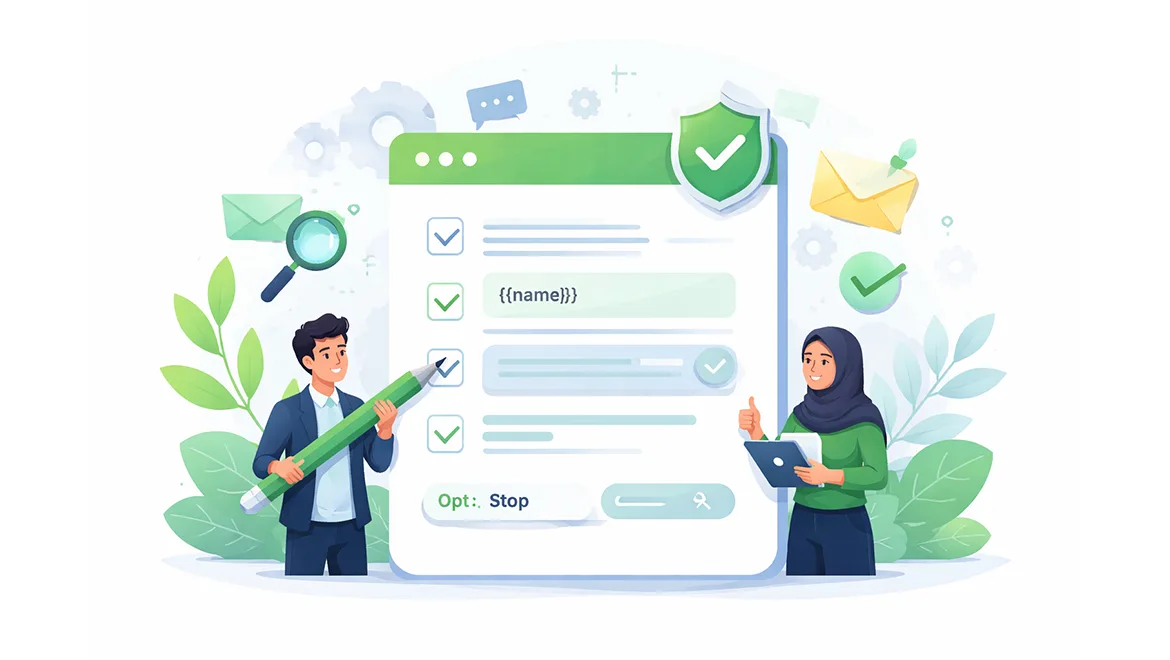
Meta reviews templates against a set of criteria that are publicly documented but not always easy to interpret in practice. The most common reasons for rejection, based on experience submitting templates for UAE businesses across every industry, are promotional language in utility templates, missing or unclear opt-out instructions in marketing templates, variable placeholders that are too vague or could be filled with anything, and messages that appear to solicit personal or financial information from the recipient.
Writing templates that get approved starts with being clear about which category the template belongs in. A message that is primarily promotional but is submitted as a utility template because the cost is lower will be rejected. A message asking for a credit card number or personal ID, regardless of framing, will not pass. A message with variable placeholders like {{1}} that could theoretically be filled with anything inappropriate will be flagged.
The strongest templates are specific, contextual, and clearly oriented toward something the customer has already expressed interest in or agreed to receive. They use named variables that make the intended content obvious. They include a clear way for the recipient to respond or opt out where required. And they are written in a tone that matches how the business actually communicates, rather than adopting a generic template style that feels impersonal and disconnected from the brand.
With Wa Tawasul, Ci CORP provides onboarding and practical guidance on setting up templates correctly before you submit them. During setup, we train your team on choosing the right category, writing compliant copy in the right language, using variables properly, and implementing opt-out wording where required, so you can submit confidently and reduce rejections. For most UAE businesses, this upfront training and clarity improves first-attempt approval rates across their initial template library.
The Template Approval Process and What to Expect
Template approval is handled by Meta's automated review systems with manual escalation for borderline cases. For straightforward utility templates submitted through a verified BSP like Ci CORP, approval typically takes between a few minutes and 24 hours. Marketing templates sometimes take longer, particularly if the language is promotional in a way that requires closer review. Authentication templates are usually approved quickly due to their standardised format.
Rejected templates come back with a reason code. The most common rejection reasons for UAE-submitted templates are promotional content in non-marketing categories, missing call-to-action or opt-out options, and template content that is too generic or ambiguous. Once rejected, a template can be revised and resubmitted.
One important point that catches businesses off guard is that template approval does not guarantee performance. A template that Meta approves might still have poor open rates or low response rates if the message is poorly worded, irrelevant to the recipient, or sent at the wrong time. Template strategy and template approval are two different things, and Wa Tawasul advises on both.
Managing Your Template Library as Your Business Grows
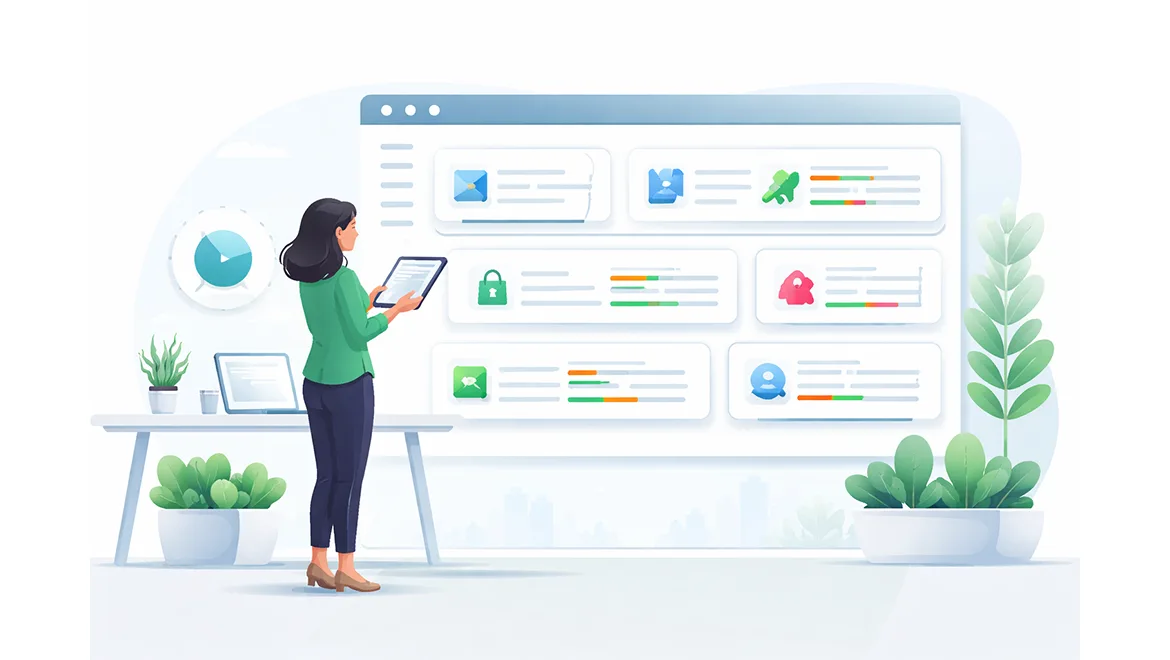
Most businesses start with a small core library of five to ten templates covering their most common outbound message types. As the business grows and its use of WhatsApp Business API matures, the template library grows with it. Seasonal campaigns add new marketing templates. New product lines add new utility notifications. New customer segments might require templates in Arabic or in different languages to serve the UAE's diverse business population.
Managing a growing template library requires attention to performance as well as approval status. Wa Tawasul's dashboard shows delivery, read, and response rates for every template in use. Templates that consistently underperform, whether in terms of open rates or opt-out rates, are worth reviewing and revising. Meta also monitors template performance at the account level, and a pattern of high opt-out rates on a particular template can affect your account's quality rating even if the individual template has not been formally flagged.
Keeping your template library clean, with active templates performing well and unused or underperforming templates retired, is good practice that protects both your marketing effectiveness and your account health. Wa Tawasul makes this straightforward by surfacing template performance data in the same dashboard where templates are managed, so decisions about revising or retiring a template are always based on real data.
Frequently Asked Questions
Q1. How many message templates can I have approved at the same time on my WhatsApp Business API account?
Meta does not publish a hard cap on the number of approved templates an account can hold simultaneously. In practice, businesses can build libraries of dozens of templates across different categories and languages without hitting any enforced limit. The more relevant consideration is keeping your template library actively managed, retiring templates that are no longer in use and monitoring the performance of those that are, to maintain a healthy account quality rating.
Q2. Can I use the same template in both English and Arabic for my UAE business communications?
Yes, and for many UAE businesses this is the recommended approach. You can submit separate template versions in English and Arabic, each with its own approval, and then use the appropriate language version based on the customer's language preference as captured during your initial conversation or lead intake flow. Wa Tawasul's automation builder allows you to route customers to the correct language template based on their profile or their previous message language.
Q3. What is the maximum length allowed for a WhatsApp message template?
WhatsApp message templates support up to 1,024 characters in the body section. Header sections, which appear above the main body, are limited to 60 characters for text headers. Footer sections, which appear below the body, are limited to 60 characters. Button text is limited to 25 characters per button. For most business communication purposes these limits are more than sufficient, and the discipline of staying within them often produces tighter, more effective messages than unconstrained formats would.
Q4. Can WhatsApp message templates include images, videos, or documents as well as text?
Yes. Templates can include a media header, an image, video, or document, above the text body. Rich media templates tend to perform well for product showcases, property listings, event announcements, and any message where a visual element adds meaningful context. The media file itself is not submitted as part of the template approval process. Only the structure and text content are reviewed. The actual media is attached when the template is used in a campaign or automation.
Q5. What does a WhatsApp call-to-action button in a template actually do, and how does it work?
Call-to-action buttons in WhatsApp templates are interactive elements that appear below the message body. They can be configured as a phone number button that dials a specified number when tapped, a URL button that opens a specified webpage in the customer's browser, or a quick reply button that sends a predefined text response back to your business inbox when tapped. Templates can include up to three buttons. In Wa Tawasul, button responses from customers can trigger further automation flows, creating an interactive sequence entirely within WhatsApp.
Q6. Does Meta charge separately for each template submission, or is template approval included in the API access fee?
Template submission to Meta for approval is free. There is no charge for submitting templates or for having them approved. The charges on Meta's side are for conversations, not for templates themselves. Wa Tawasul's subscription fee covers platform access and includes template submission management as part of the service. There are no separate charges for submitting templates through Wa Tawasul.
Q7. Can templates be used to re-engage customers who have not messaged my business in more than 24 hours?
Yes, and this is one of the primary uses of marketing and utility templates. When a customer has not messaged your business within the past 24 hours, or has never messaged you before, the only way to initiate a WhatsApp conversation with them is through an approved template message. Once they respond to the template, a 24-hour service window opens during which you can send free-form replies without requiring further template use.
Q8. What happens if a customer reports a message sent from one of my WhatsApp templates as spam?
Customer spam reports on your template messages contribute to your WhatsApp account's quality rating. A single report is unlikely to cause a significant issue, but a pattern of spam reports on a specific template or campaign indicates a problem with either the template content, the targeting, or the contact list being used. Meta monitors quality ratings at the account level and can restrict messaging limits for accounts with consistently poor quality scores. Wa Tawasul monitors quality rating changes in real time and alerts account holders when the rating drops so action can be taken before it becomes a restriction.
Q9. Is there a way to personalise a WhatsApp template with more than just the customer's name?
Yes. Templates can include multiple variable placeholders, each filled with a different piece of customer data when the message is sent. Common personalisation variables in UAE business templates include customer name, property address or reference number, appointment date and time, order number, product name, account balance, branch or location name, and any other data point your system holds for that contact. The Wa Tawasul platform maps these variables to fields in your contact database or CRM, so personalisation happens automatically without manual input for each message.
Q10. How are WhatsApp template messages affected by the UAE's data protection regulations?
The UAE's Personal Data Protection Law applies to the handling of personal data, including the customer information used to personalise WhatsApp template messages. Businesses using WhatsApp API for outbound messaging should ensure they have appropriate consent from recipients to receive commercial or promotional messages, that personal data used in template personalisation is handled in accordance with their stated privacy policy, and that opt-out requests are processed promptly. Wa Tawasul's opt-out management handles the WhatsApp side of this automatically, but businesses remain responsible for their broader data governance obligations.